



What is it?
Orthodontics is the dental specialty concerned with correcting the position of the teeth and jaws. It improves chewing function, the appearance of the smile and oral health in patients of all ages.
Orthodontics
Orthodontics combines science and aesthetics to create harmonious, functional smiles.
At La Clinique, we prioritise discreet, comfortable and technologically advanced solutions tailored to each patient’s lifestyle.
A well-aligned smile is not merely an aesthetic consideration. It is essential for proper oral function and long-term oral health.
Why is orthodontic treatment important?
- Improves the appearance of the smile
- Makes daily oral hygiene easier
- Reduces the risk of tooth decay and gum disease
- Improves chewing function and the balance of the Temporomandibular Joint (TMJ)
- Reduces the risk of dental fractures
Your child’s first orthodontic assessment
A first orthodontic assessment is recommended at around the age of seven, when both primary and permanent teeth are present.
The aim is not necessarily to begin treatment, but to identify any changes in growth, bite or oral habits at an early stage.
Where appropriate, interceptive orthodontics can correct problems at an earlier and less complex stage, potentially reducing the need for more extensive treatment in the future.
When should you seek an orthodontic assessment?
- Misaligned or crowded teeth
- Gaps between the teeth (diastemas)
- Changes or problems affecting the bite
- Difficulty chewing or speaking
- Mouth breathing or oral habits such as prolonged dummy use or nail biting
Did you know?
In Portugal, only approximately one hundred dentists are formally recognised as Specialists in Orthodontics by the Portuguese Dental Association.
Achieving this specialist recognition requires a highly demanding training pathway. In addition to five years of education in dental medicine, it involves at least three further years of advanced training dedicated exclusively to orthodontics, followed by a rigorous assessment and approval process.
For further information, please consult the Portuguese Association of Orthodontists.
Orthodontic appliances
Several types of orthodontic appliances are available. They are selected according to the patient’s age, diagnosis and treatment objectives.
At La Clinique, we take a personalised approach, combining different techniques to achieve functional, stable and naturally aesthetic results.
Self-ligating fixed braces are modern orthodontic systems that use low-friction brackets, allowing the teeth to move more efficiently and comfortably.
Unlike conventional braces, they do not require elastic bands to hold the orthodontic archwire in place. This makes oral hygiene easier and helps to reduce discomfort.
Indications
- Comprehensive correction of dental alignment
- Suitable for cases of varying severity, from simple and moderate to complex
- Treatments requiring greater control over tooth movement
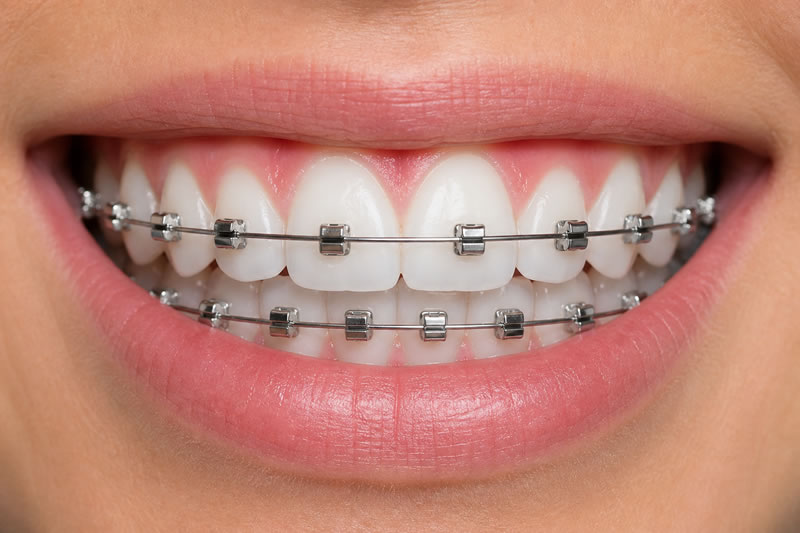
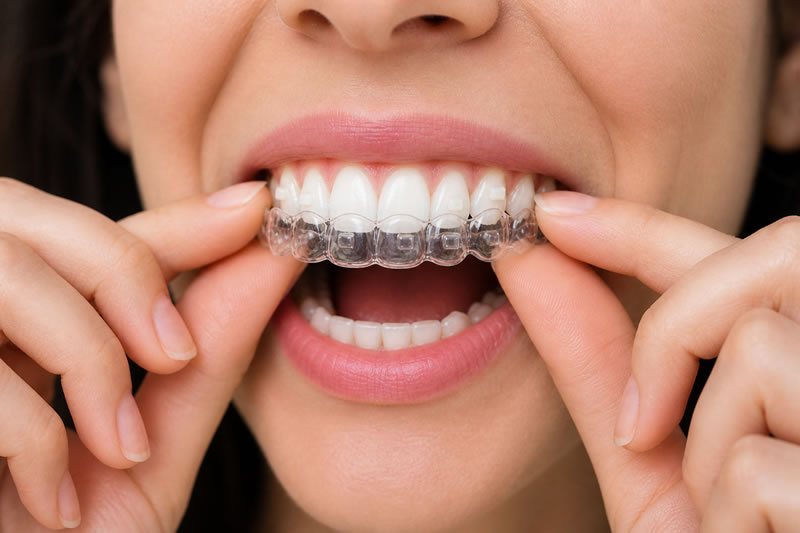
Transparent aligners are a discreet alternative to traditional fixed braces.
They consist of a series of customised, removable aligners that gradually move the teeth into their desired positions.
Virtually invisible, they offer greater comfort in everyday life and can be removed for eating and oral hygiene.
Indications
- Mild to moderate corrections
- Patients who prioritise aesthetics and comfort
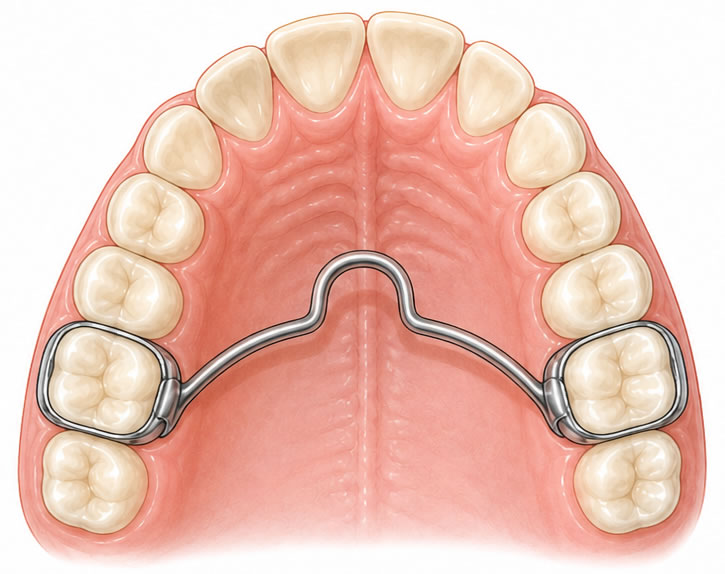
A fixed appliance placed between the upper molars, used for anchorage control, correction of molar positioning, and dental stabilisation during orthodontic treatment.
Indications
- Control of tooth movement
- Increased anchorage
- Support in combined treatments
Functional appliances
Functional appliances are used primarily in growing children and adolescents. They help guide jaw development and improve the relationship between the upper and lower dental arches.
A removable appliance comprising two plates — one upper and one lower — that work together to move the lower jaw forwards and encourage its growth.
Indications
- Class II malocclusion with a retruded lower jaw
- Growing children
- Increased overbite
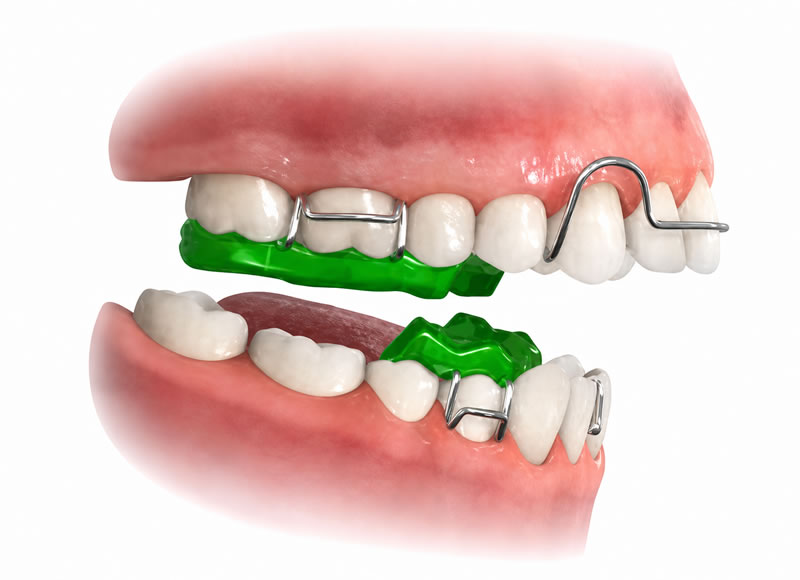
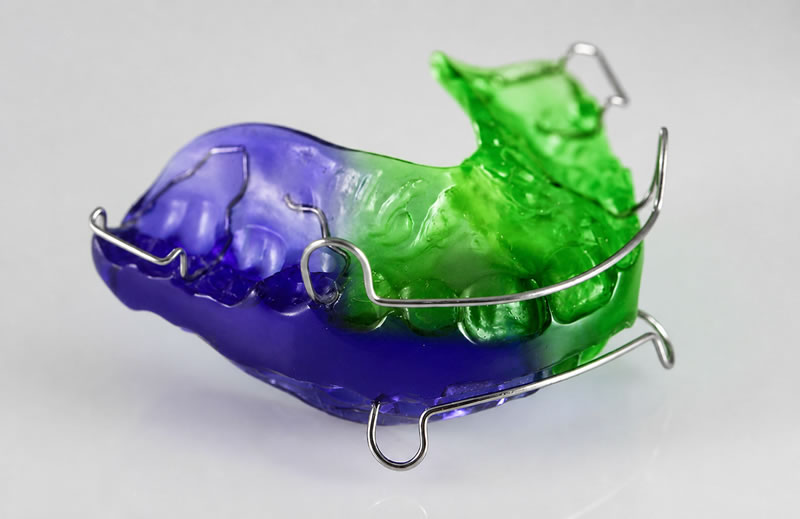
Removable functional appliance consisting of a single-piece device that positions the lower jaw in a more advanced position, promoting muscular adaptation and mandibular growth.
Indications
- Mandibular growth discrepancies
- Young patients
- Early orthopaedic corrections
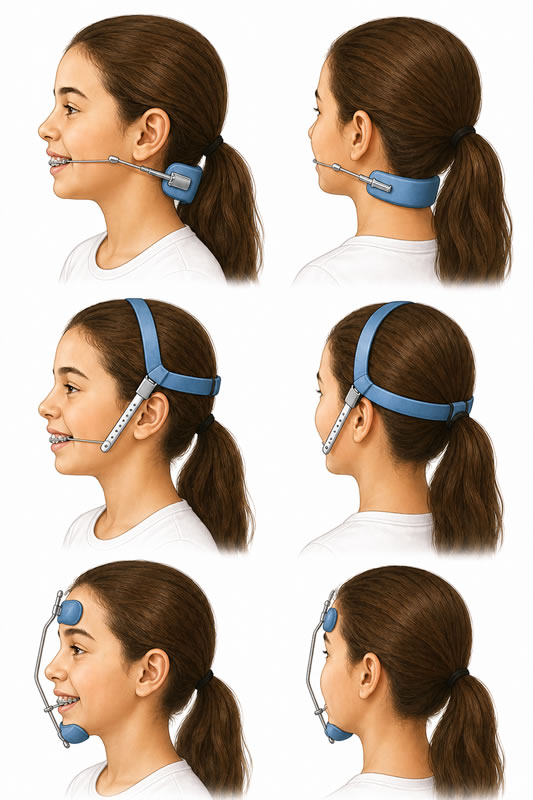
An external appliance that applies controlled forces to the jaws, helping to limit or redirect skeletal growth. It is often used in combination with other orthodontic appliances.
Indications
- Skeletal malocclusions
- Treatment during growth periods
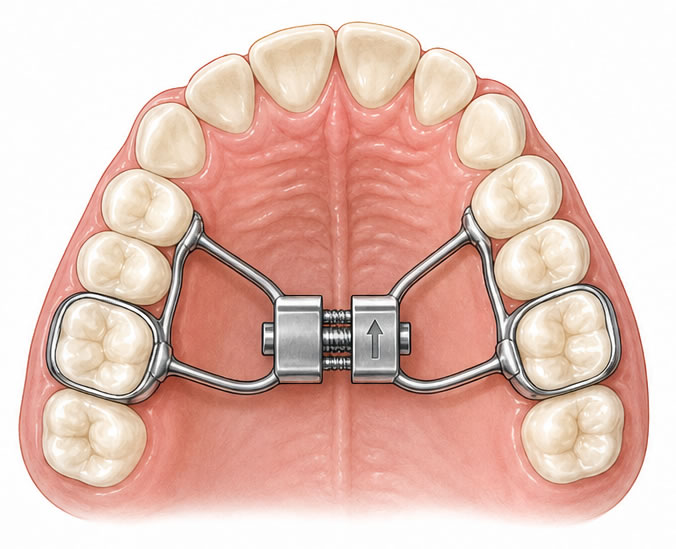
A fixed appliance that expands the upper jaw through the application of progressive forces, creating space and improving function.
Indications
- Narrow upper jaw
- Lack of dental space
- Crossbite
Orthodontic retention
Following orthodontic treatment, it is essential to maintain the results achieved. Retainers help prevent the teeth from moving back towards their original positions, which is a natural tendency over time.
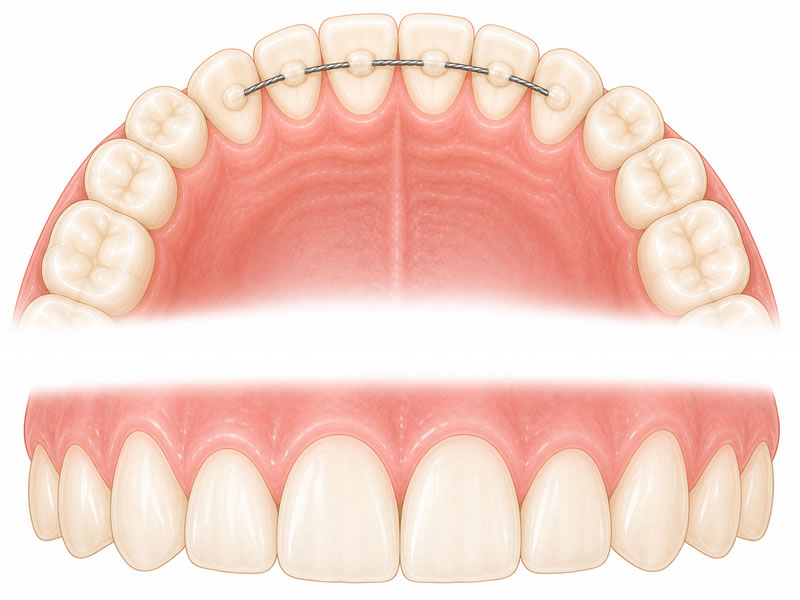
A wire bonded to the inner surface of the teeth, usually in the front region behind the anterior teeth, from canine to canine. It provides continuous stability without depending on the patient remembering to wear it.
Indications
- Long-term maintenance of orthodontic results
- Cases with a higher risk of relapse
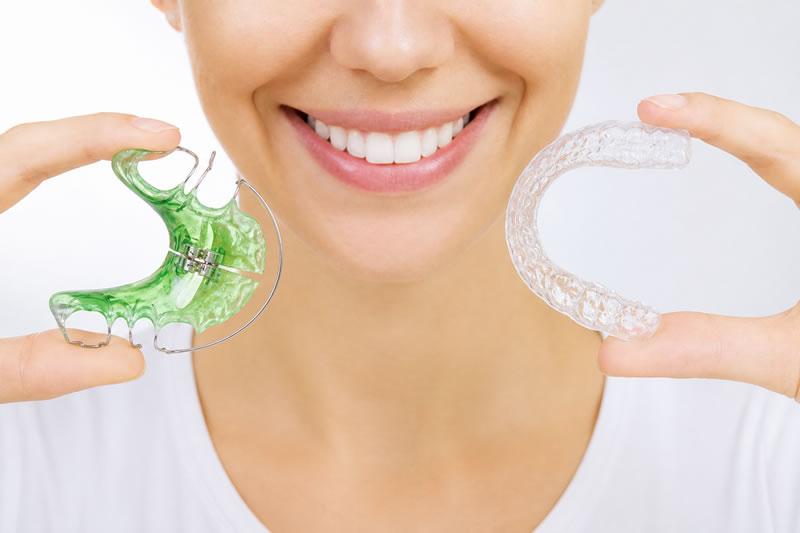
Includes different options, such as:
- Clear retainers: discreet and comfortable
- Hawley retainer: an acrylic appliance with a metal wire, adjustable
Indications
- Post-treatment retention
- Cases requiring additional control
- Patients with good compliance
Ready to book your appointment?
Contact us today to arrange your visit and take the first step towards a healthier smile.